


 Home
Home Electrical Engineering
 Table of Contents
 Profiles
 Q & A
Q & A


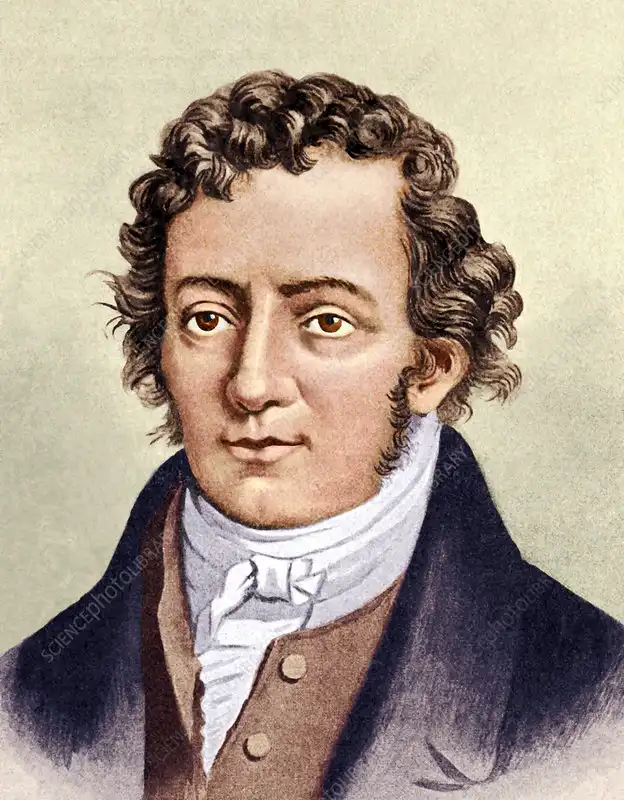
Andre-Marie Ampere was a French physicist and mathematician who was one of the founders of the science of classical electromagnetism. His name endures in everyday life in
the ampere, the unit for measuring electric current.
On September 18, 1820, introduced a new field of study, electrodynamics, devoted to the effect of electricity in motion, including the interaction between currents in adjoining conductors and the interplay of the surrounding magnetic fields. Constructed the first solenoid and demonstrated how it could behave like a magnet (the first electromagnet). Suggested the name galvanometer for an instrument designed to measure current levels.
On September 18, 1820, introduced a new field of study, electrodynamics, devoted to the effect of electricity in motion, including the interaction between currents in adjoining conductors and the interplay of the surrounding magnetic fields. Constructed the first solenoid and demonstrated how it could behave like a magnet (the first electromagnet). Suggested the name galvanometer for an instrument designed to measure current levels.
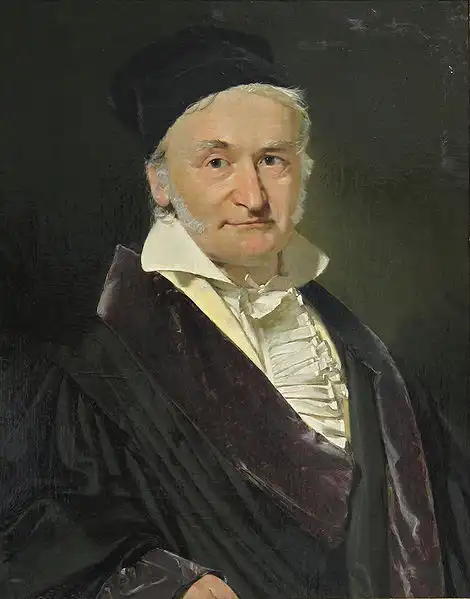
Carl Friedrich Gauss is a German mathematician and physicist who has made significant contributions to many fields of mathematics and natural sciences. Gauss is sometimes referred to as "the greatest mathematician" and "the greatest mathematician since ancient times". He has had an extraordinary influence on many fields of Mathematics and science and is one of the most influential mathematicians in history.
Charles-Augustin de Coulomb was a French physicist best known for the formulation of Coulomb's law, which defines the force between two electrical charges and is, in fact, one of the principal forces in atomic reactions. Performed extensive research on the friction encountered in machinery and windmills, the elasticity of metal and silk fibers, and the description of the electrostatic force of attraction and repulsion. He also did important work on friction.
The SI unit of electric charge, the coulomb, was named in his honor in 1880.
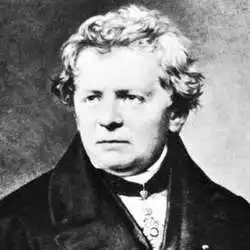
Georg Simon Ohm (1787-1854), a German physicist, in 1826 experimentally determined the most basic law relating voltage and current for a resistor. Ohm's work was
initially denied by critics.
Born of humble beginnings in Erlangen, Bavaria, Ohm threw himself into electrical research. His efforts resulted in his famous law. He was awarded the Copley Medal in 1841 by the Royal Society of London. In 1849, he was given the Professor of Physics chair by the University of Munich. To honor him, the unit of resistance was named the ohm.
Born of humble beginnings in Erlangen, Bavaria, Ohm threw himself into electrical research. His efforts resulted in his famous law. He was awarded the Copley Medal in 1841 by the Royal Society of London. In 1849, he was given the Professor of Physics chair by the University of Munich. To honor him, the unit of resistance was named the ohm.
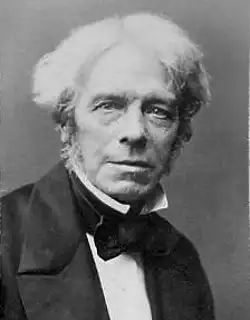
English scientist, physicist and chemist Michael Faraday is known for his many experiments that contributed greatly to the understanding of electromagnetism. Faraday, who became one of the greatest scientists of the 19th century, began his career as a chemist. His major contribution, however, was in the field of electricity and magnetism . He was the first to produce an electric current from a magnetic field, invented the first electric motor and dynamo.

An important contributor to the establishment of a
system of absolute units for the electrical sciences,
which was beginning to become a very active area of
research and development. Established a definition
of electric current in an electromagnetic system
based on the magnetic field produced by the current.
He was politically active and, in fact, was dismissed
from the faculty of the University of Gottingen for
protesting the suppression of the constitution by the
King of Hanover in 1837. However, he found other
faculty positions and eventually returned to Gottingen as director of the astronomical observatory.
Received honors from England, France, and Germany, including the Copley Medal of the Royal Society.
Be the first to comment here!
Do you want to say or ask something?